





How to Increase Bone Density Naturally
June 15, 2026
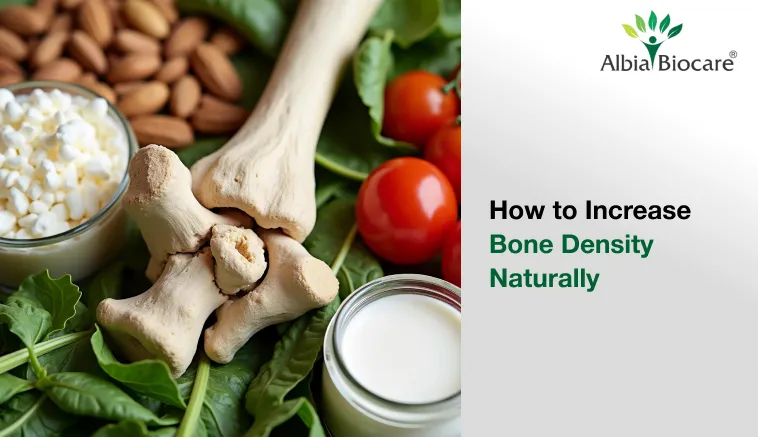
Table of Contents
Bone density is at its strongest in our late twenties and continues until the early thirties. But, bone mass starts declining by 0.5% to 1% every year after 50, and post-menopausal women lose up to 1-3% annually in the first few years following menopause.
It is crucial to improve bone density, as there is an increased risk of developing osteopenia and, eventually, osteoporosis, which can affect quality of life and independence.
In this blog, we’ll discuss how to naturally improve bone density for better health and overall well-being.
5 Ways to Improve Bone Density
1. Eat More Protein
Proteins are the building blocks of the body. They increase the muscle mass needed to maintain bone density. As we grow older, we restrict our diet, and protein intake decreases, which harms bones and muscles alike. So, what we should do is:
- Eat 0.88 grams of protein per kilogram of body weight per day.
- Incorporate eggs, lean meat, fish, dairy, legumes, cottage cheese and tofu in your daily diet.
- Animal protein can sometimes leach calcium. Choose plant-based proteins such as chickpeas, lentils, and kidney beans as alternatives.
- Include probiotics such as Greek yoghurt, fermented foods, and kefir to support gut and bone health.
2. Follow a Natural Diet
Eating a balanced, protein-rich, calcium-dense diet is only half the challenge. Only when our bodies can effectively absorb nutrients can we function properly, and the best way to do this is to follow a natural diet.
- Foods like spinach, Swiss chard, and beets are high in oxalic acid, which binds calcium in the gut and prevents its absorption.
- Switch to low-oxalate, calcium-rich greens, such as kale, collard greens, Chinese broccoli, and watercress, to increase calcium uptake.
- Consume natto (fermented soy) and nettle tea to provide calcium, magnesium, and vitamin K.
- If possible, follow a Mediterranean-style anti-inflammatory diet or a DASH diet to reduce sodium intake and improve calcium absorption for better bone health.
- Avoid or limit colas, caffeine, and processed foods.
Here is a quick reference for bone-supportive nutrients and where to find them:
| Nutrients | Food Sources |
| Calcium | Kale, collard greens, kefir, sardines, bok choy |
| Vitamin K2 | Natto, cheese, fermented foods |
| Magnesium | Okra, sweet potato, collard greens, raisins |
| Vitamin C | Red peppers, oranges, broccoli, strawberries |
| Omega-3s | Salmon, sardines, walnuts, ground flaxseed |
3. Weightlifting and Strength Training
Bones respond best to mechanical stress. When you lift weights or strength-train, new bone tissue forms; that’s called osteogenic loading. High-impact activities and resistance-based exercises improve bone mineral density in all age groups.
In fact, even medicine franchise companies support different types of workouts:
- Strength training with progressive overload using kettlebells, dumbbells, and TRX.
- High-impact activities involving tennis, pickleball, swimming, and jumping.
- Bodyweight and toning work, such as barre, yoga, and Pilates, for core stability and balance.
- Tai chi can reduce the risk of falling in older adults by improving balance.
- Vigorous walking at 3.8 miles per hour or faster is beneficial for maintaining bone density.
4. Get Adequate Sunlight
- Getting 15–20 minutes of direct sun exposure daily supports vitamin D production.
- If you are over 50 or spend most of your time indoors, discuss taking vitamin D3 supplements with your physician, starting at 800–2,000 IU.
- Ensure sufficient vitamin K intake, as it is essential for vitamin D metabolism.
5. Maintain a Moderate Weight
- If you are underweight (BMI below 20), you are at risk of developing osteoporosis.
- If you are overweight or obese and trying to lose weight rapidly, it can also lead to massive muscle and bone loss.
- Manage your weight through stable, consistent nutrition and exercise to protect bone health in the long term.
Conclusion
How to increase bone density depends on three factors:
- Eating in a way that maximises calcium absorption
- Exercising in a way that loads your bones
- Protecting your vitamin D and K levels throughout.
All you have to do is make small, deliberate lifestyle changes. If you are looking for clinically approved nutritional supplements to improve your bone density, PCD Pharma distributors like Albia Biocare offer a trusted range of bone health formulations. Explore Albia Biocare’s product portfolio today. https://www.albia.in/product.php






Leave a Reply